.svg)

Free whitepaper for AI and engineering leaders
The Forward Deployed Engineer: getting AI from demo to production
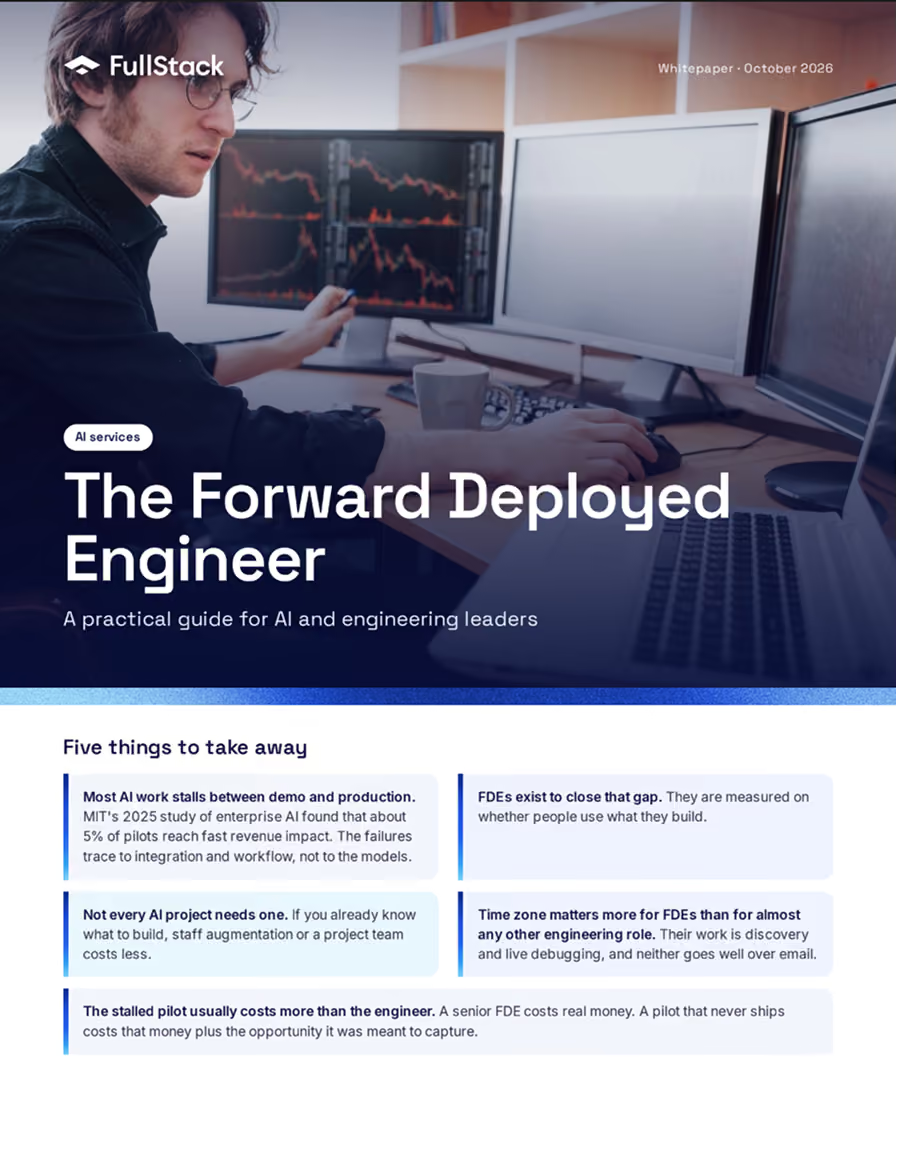
Most AI pilots stall in the gap between a good demo and the systems it has to run on. This guide explains what a forward deployed engineer does and how to tell if your project needs one. It also shows why a stalled pilot usually costs more than the engineer.
Written by FullStack's leadership team, with every figure sourced. Published October 2026.


The problem
Most AI pilots don't fail on the model
In 2025, MIT's NANDA initiative reviewed 300 public AI deployments and interviewed 150 leaders. Only about 5% of pilots produced fast revenue gains. The researchers didn't blame model quality. They pointed to weak integration with real workflows.
If you've run a pilot, you've probably seen this. The demo works on a clean sample of data and answers every question in the meeting. Then the production data turns out to be spread across four systems, and the people meant to use the tool were never in the room. A demo is a bit like a show home: everything works until someone runs the dishwasher and the dryer at the same time.
Forward deployed engineers exist to close that gap. This guide explains how they work, and how to decide whether your next AI project needs one or a cheaper option will do.
What’s inside
Numbers worth knowing

About 5% of AI pilots reach fast revenue impact.
MIT's 2025 study traced the rest to integration and workflow problems, not to the models.

67% success when partners are involved.
AI projects run with specialist vendors or partners succeeded about 67% of the time. Internal builds succeeded about a third as often.

Code output up several hundred percent. Releases up 10 to 20%.
AI coding tools made writing code cheap. The slow part now is everything that happens after the code is written.

1,165% more FDE job postings in one year.
Demand for forward deployed engineers grew much faster than the number of people who have done the job.

One extra hour of time difference cuts live calls by 11%.
Harvard Business School researchers found the effect is largest on collaborative, non-routine work. That describes most FDE work.

$30,000 lost for every month a system isn't live.
That's the guide's worked example for a mid-market insurer. The engineer's rate is rarely the biggest number on the page.
Results from the guide
What FDE work achieves in practice
500 to 5
A regulatory compliance provider had trained staff reading call transcripts line by line. A five-person FullStack team built an agentic system that sends only high-risk sentences to a human. Reviewers went from about 500 sentences per call to five, matching human auditors at 93% average accuracy.
83%
An academic health system cut patient placement time by 83% after vendor FDEs rebuilt its care coordination tools alongside the hospital's own analytics team.
16 days
A wholesale insurance brokerage moved automated policy review into initial production 16 days after a working session on its own data.

Key takeaways from this guide
After reading this guide, you’ll be able to:

Spot a real FDE. Tell an engineer who ships production code apart from a sales engineer with a new title, and know how the role differs from staff augmentation.
Decide if you need one. Use two questions and seven warning signs to sort your AI work into the right engagement model before you staff anything.
Know what the first 12 weeks look like. Follow an engagement from week-one discovery to a system your own team can run without outside help.
Choose between hiring and sourcing. Weigh a full-time hire against a partner, and walk into vendor calls with five questions that separate real FDEs from rebranded ones.
Make the business case. Put a number on what each month of delay costs, and see why time zone overlap matters more for FDEs than for almost any other role.
Who this guide is for
AI and engineering leaders, IT included, at US companies with 200 to 2,000 people. Teams that size rarely have spare senior engineers, yet they carry legacy systems and compliance rules much like larger firms do. Meanwhile, the AI labs are pointing their own FDE programs at the Fortune 500.
If you have an AI demo that impressed everyone in the meeting and hasn't moved since, this is for you.

From FullStack's leadership

Every company we talk to has an AI demo. Very few have an AI system that their operations team would miss if it went down on Monday. That second thing is what an FDE is for.

The model is maybe a fifth of the work. The rest is permissions, data plumbing, evals, and sitting with the people who will use the thing until it fits how they actually work.


Table of contents

Why AI pilots stall
What a forward deployed engineer is
What FDEs do, week by week
What FDEs achieve across industries
The decision matrix: when you need an FDE
Real-time work: why the FDE's time zone matters
Hire or source: full-time FDEs versus contractors and partners
The economics: why FDEs cost what they do, and why it pays
Getting started: the four phases of FDE work
Sources for every figure in the guide
Two ways to get the guide
Read it yourself. Enter your work email, and the PDF is yours. There’s no sales follow-up unless you ask for it.
Talk it through with us. Book a 30-minute call with FullStack. Bring the AI project in front of you, and we'll tell you whether it needs an FDE or whether a cheaper option will do the job.

FAQs
What is a forward deployed engineer?

A senior engineer who works inside your team and owns one result: an AI system running in your real environment, used by your real people. The role started at Palantir in the early 2010s and became the fastest-growing title in AI hiring in 2025.
How is an FDE different from staff augmentation?
Staff augmentation adds capacity to a backlog you direct, which works well when you already know what to build. An FDE fits when you know the problem but not the AI answer. You set the goal, and the FDE owns the path to it.
Does every AI project need an FDE?
No. If a licensed tool already covers the need, or you only need extra hands on a clear spec, a cheaper model will do the job. Paying for discovery you don't need is like hiring an architect to hang a picture. The guide includes a decision matrix to help you tell the difference.
Why does the FDE's time zone matter so much?
Most FDE work happens live, with business users and IT admins who need answers the same day. Harvard Business School researchers found that one extra hour of time difference cuts calls and video meetings by about 11%.
Who wrote the guide, and where do the numbers come from?
FullStack's leadership team wrote it. Every figure cites its source in the back of the guide, and the use-case results are reported as the organizations involved published them.