Corporate filings from Walmart, The New York Times, and Honeywell show where AI is entering everyday business: retail operations, proprietary information, and industrial decision-making.
Walmart, The New York Times Company, and Honeywell operate in very different industries. Their recent annual reports, however, show AI affecting many of the same business concerns: customer experience, workforce productivity, proprietary information, operations, and risk.
Walmart’s fiscal 2026 annual report describes AI as increasingly important to customer and member experiences, associate productivity, operational efficiency, supply chain capabilities, and the way customers shop.
The New York Times Company’s 2025 Form 10-K says the shift toward contained digital ecosystems has already harmed its online traffic and audience, and that generative AI may accelerate the move toward products that answer users without directing them to original sources. The filing also says AI companies compete for audiences, subscribers, advertisers, and licensees, while some unauthorized parties have scraped, copied, or misappropriated Times content.
Honeywell’s 2025 annual report, which predates the June 29, 2026, separation of Honeywell Aerospace, describes machine learning, predictive analytics, and Honeywell Forge as parts of its software and connected-product strategy.
Their priorities differ, but the filings raise several questions that companies across industries are working through: where AI can improve customer or operational work, how organizations should protect proprietary data and content, and how AI-supported decisions fit into existing workflows.
Walmart: AI Connects Retail Systems
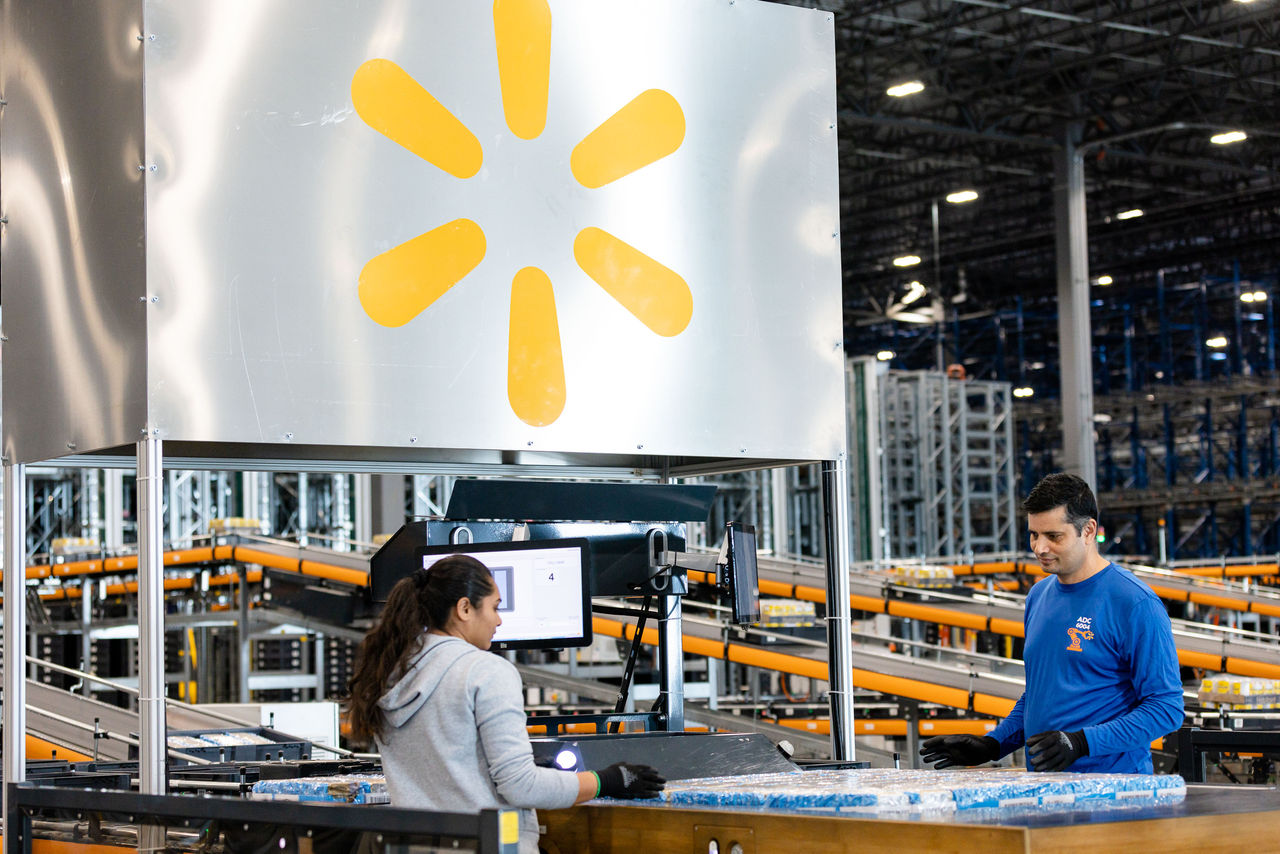
Walmart’s AI investments show how quickly retail AI can extend across customer experiences, associate productivity, supply chain operations, and internal functions. Its fiscal 2026 annual report says Walmart increasingly uses AI-powered tools to support customer- and member-facing experiences, associate productivity, and operational efficiency. The filing also describes continued investment in AI, E-commerce, technology, automation, supply chain capabilities, stores, and clubs.
In its October 2024 AI strategy announcement, Walmart described plans to use proprietary AI, generative AI, augmented reality, and immersive-commerce technologies to support personalization, search, product discovery, and associate experiences.
Those priorities rely on retail data that changes throughout the day. A product-discovery experience may need to draw on product descriptions, availability by location, pricing and promotion details, delivery options, and returns policies. An associate-support tool may use many of the same sources while applying different access permissions based on the employee’s role.
That data often determines whether a customer or associate can act on an AI-generated response. A shopping assistant may recommend a relevant item, but the recommendation won’t help much if the product is out of stock nearby, the price has changed, or the delivery estimate doesn’t match fulfillment capacity. An associate assistant can help employees answer customer questions more efficiently, but only when it retrieves current product and policy information from approved sources.
Walmart also describes Element, its internal machine-learning platform, as supporting AI applications across areas including search, market intelligence, supplier insights, and last-mile delivery. The example shows how a large retailer can give multiple teams common infrastructure rather than build each AI application from scratch.
Retailers don’t need Walmart’s technology footprint to create a consistent approach to AI development. Teams can establish reusable patterns for data access, integrations, evaluation, user permissions, and monitoring before launching several disconnected projects. Doing so helps organizations carry lessons from one application into the next and creates a more practical path to scaling AI.
The New York Times Company: AI Raises Data-Use Questions
The New York Times Company’s AI disclosures focus on the value, use, and control of proprietary content. Its 2025 annual report says generative AI may accelerate changes that reduce referral traffic and audience, while AI companies increasingly compete for subscribers, advertisers, and licensees. It also says unauthorized third parties have scraped, copied, or misappropriated Times content, making intellectual-property protection more costly and difficult.
That concern extends to any organization using AI with internal knowledge or customer information. Product catalogs, pricing data, customer-service records, engineering documents, technical manuals, maintenance histories, operating procedures, contracts, and internal policies can all support useful AI applications.
An assistant may help employees find an account record, product detail, engineering specification, or the latest company policy. However, organizations need clear rules for what the application can retrieve, who can use it, and how prompts and responses are handled.
Before connecting an AI application to internal data, teams should establish:
Which sources the application can search or retrieve from
Which users can access the application and its outputs
Whether the model provider retains or uses submitted data
How prompts, responses, and user actions are logged
How long records are retained
What the application should do when it cannot find a reliable answer
Those decisions should be built into the application’s architecture, access controls, and vendor agreements. They cannot be resolved with an employee-use policy alone.
Honeywell’s 2025 annual report, published before the company separated its aerospace business in June 2026, describes machine learning, AI algorithms, predictive analytics, and Honeywell Forge across its portfolio.
The filing says Honeywell uses proprietary machine-learning and AI algorithms in its industrial automation products and projects, supported by the Honeywell Forge platform. Across different parts of its pre-spin-off portfolio, the filing describes Forge solutions supporting predictive maintenance and analytics, smart maintenance, building performance, and asset productivity.
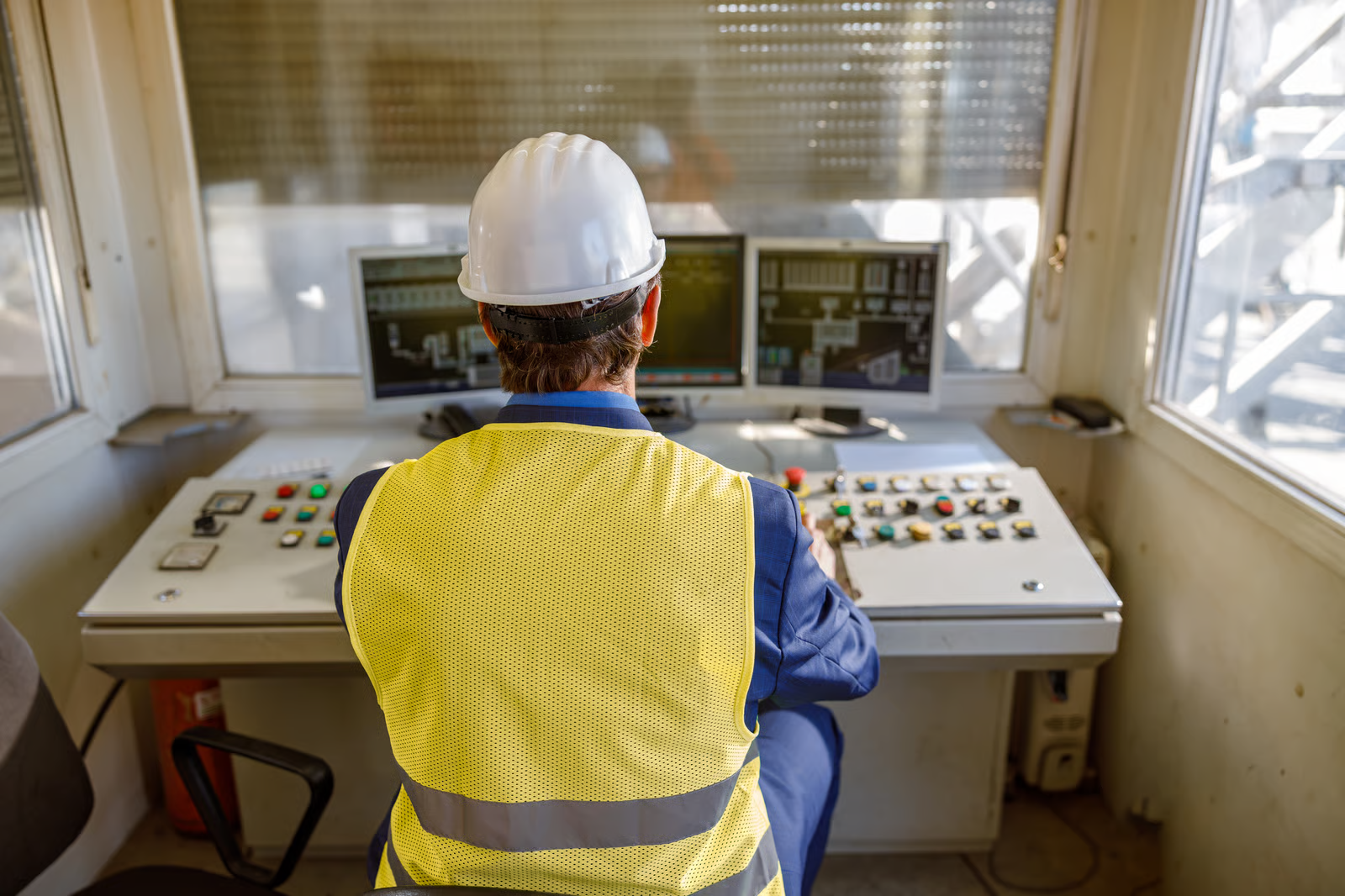
Predictive maintenance is one example of how that approach can support operations. Predictive systems can analyze equipment data, service histories, and operating patterns to identify conditions that may warrant attention before a failure affects operations. Maintenance teams can then use that information to prioritize inspections, plan work, and prepare for downtime.
Honeywell says its predictive-maintenance tools use equipment models, real-time analytics, remote monitoring, and dashboards to help teams identify issues and track corrective actions.
The technology still has to fit the conditions in which teams use it. A maintenance recommendation is more useful when it is based on reliable information, reflects the current state of an asset, and appears within the systems technicians and reliability teams already use. Teams also need to weigh the recommendation against production schedules, safety requirements, available parts and labor, and the cost of taking equipment offline.
What leaders should plan for
The filings from Walmart, The New York Times, and Honeywell show that AI adoption has become a business-wide implementation effort. The most useful projects start with an operational need, then bring the appropriate business, technical, and governance stakeholders into the work.
Start with a defined workflow
AI tools don’t create value simply because they can generate content, retrieve information, or recognize patterns. Value comes from improving a workflow that matters to the business.
Retail leaders may focus on:
Reducing customer-support resolution times
Improving product discovery and search relevance
Helping associates find accurate product or policy information
Improving demand-planning and replenishment decisions
Identifying potential fulfillment issues earlier
Manufacturing leaders may focus on:
Reducing unplanned downtime
Prioritizing maintenance and inspection work
Accelerating quality inspection
Giving technicians faster access to technical knowledge
Detecting production constraints or process issues earlier
A defined workflow creates a clearer basis for evaluating data requirements, technology choices, business ownership, and expected outcomes.
Identify the systems involved
Once the workflow is defined, teams should map the systems and information it requires. That includes source systems, data owners, update frequency, available integration methods, and access restrictions.
For a retail customer-service copilot, that may include order-management systems, customer accounts, product details, shipping information, returns policies, and case-management records. For a manufacturing maintenance assistant, it may include equipment data, maintenance logs, parts inventory, technical manuals, work orders, and safety documentation.
The quality of the application depends on the quality and availability of that underlying information. Teams should also identify where the system needs human review, particularly when an AI output influences a customer interaction, financial decision, maintenance action, or safety-related process.
Plan for production, not just pilots
A pilot can validate whether users find an AI application helpful. Production deployment requires a more complete plan.
Teams should establish:
Success metrics tied to the workflow, such as resolution time, conversion, downtime, throughput, or quality outcomes
Evaluation criteria for model accuracy, relevance, reliability, and safe behavior
Authentication, role-based access, and data-protection requirements
Monitoring for application failures, degraded performance, unexpected outputs, and unusual data-access activity
A process for user feedback, issue escalation, and corrections
A fallback workflow when the application is unavailable or produces a low-confidence result
Moving from interest to execution
Walmart, The New York Times, and Honeywell offer three different views of the same business reality. AI can influence customer experiences, proprietary information, workforce tools, asset performance, and operational decision-making. Those areas already involve multiple systems and owners, which is why AI initiatives require coordinated work across the organization.
The companies that make meaningful progress won’t necessarily be the ones that test the most AI tools. They’ll be the ones that select the right workflows, use governed data, integrate applications with the systems employees rely on, and build controls that fit the potential impact of each use case.
FullStack helps businesses bring those pieces together.
Lorem ipsum dolor sit amet, consectetur adipiscing elit, sed do eiusmod tempor incididunt ut labore et dolore magna aliqua. Ut enim ad minim veniam, quis nostrud exercitation ullamco laboris nisi ut aliquip ex ea commodo consequat. Duis aute irure dolor in reprehenderit in voluptate velit esse cillum dolore eu fugiat nulla pariatur.
What does AI adoption mean for retail and manufacturing companies?
AI adoption means putting AI into defined business workflows, such as product discovery, customer support, demand planning, predictive maintenance, quality inspection, or engineering knowledge retrieval. The work involves more than choosing a model. Organizations need reliable data, integrations with the systems employees use, clear access controls, and a way to measure results.
How is Walmart using AI in retail operations?
Walmart has disclosed investments in AI and generative AI for customer shopping experiences, associate work experiences, supply chain efficiency, operations, management functions, and talent development. Its initiatives include personalization, search, product discovery, and employee tools.
Why does AI governance matter when using proprietary business data?
AI governance helps organizations determine which data an AI application can access, which users can view or act on its outputs, whether a third-party provider can retain submitted data, and how prompts and responses are logged. These controls matter when applications use customer information, product data, technical documents, financial records, contracts, or internal policies.
What is Honeywell Forge, and how does it use AI?
Honeywell Forge is an industrial IoT and software platform used across Honeywell’s connected offerings. Honeywell describes Forge solutions that use operational data, predictive analytics, machine learning, and AI to support applications such as predictive maintenance, building performance, fleet management, and asset productivity.
How should companies move an AI pilot into production?
Companies should start with a specific workflow and a measurable outcome, then identify the data sources, systems, user roles, and human-review requirements involved. Before launch, teams should establish success metrics, evaluate accuracy and reliability, define access and data-protection controls, monitor performance and usage, create feedback and escalation processes, and document a fallback workflow for outages or low-confidence outputs.
How can you cut your AI coding costs without switching models?
This guide gives you the math, the meaningful benchmarks, and a six-step plan to cut spend without giving up capability.
Enjoyed the article? Get new content delivered to your inbox.
Subscribe below and stay updated with the latest developer guides and industry insights.
Thank you! Your submission has been received!
Oops! Something went wrong while submitting the form.
Iframe is blocked. Accept cookies to load it.
Thank you! Your submission has been received!
Oops! Something went wrong while submitting the form.
We use cookies to provide our services, to allow us to better understand our audience, and to provide and serve personalized ads or content. By using our website, you consent to the terms of our Privacy Policy and our Cookie Policy, and the use of cookies, pixels, and other technology as described more fully therein


.jpg)