Clean, fast, & built to last: AI-powered software engineering
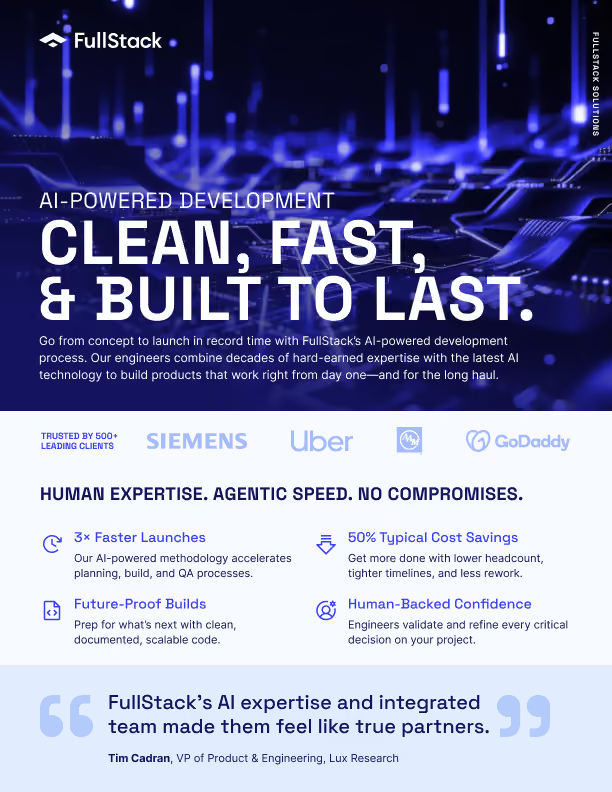
Go from concept to launch in record time with FullStack’s AI-powered development process. Our engineers combine decades of hard-earned expertise with the latest AI technology to build products that work right from day one—and for the long haul.
AI-Powered Development Clean, Fast, & Built to Last.
Go from concept to launch in record time with FullStack’s AI-powered development process. Our engineers combine decades of hard-earned expertise with the latest AI technology to build products that work right from day one—and for the long haul.
50% Typical Cost Savings Get more done with lower headcount, tighter timelines, and less rework.
Future-Proof Builds Prep for what’s next with clean, documented, scalable code.
Human-Backed Confidence Engineers validate and refine every critical decision on your project.
Trusted by 500+ leading clients
(Logos shown: Siemens, Uber, Arm, GoDaddy)
Testimonial
“FullStack’s AI expertise and integrated team made them feel like true partners.” Tim Cadran, VP of Product & Engineering, Lux Research
How It Works Our Agentic Ecosystem
Our engineers manage a fleet of specialized AI agents to build fast, lean, and clean. Agents reference a project-specific pattern library to tackle everything from development to QA. At each step, humans review and validate all agent outputs.
Agent Ecosystem Architecture
Agent Roles (Diagram Labels)
Planning Agent Orchestrates & Decomposes Features decomposed into chunks
Agent Ecosystem Architecture Diagram Description: A structured workflow diagram showing a centralized agent ecosystem managed by human engineers. At the core is a sequence of specialized AI agents—Planning, Backend, Frontend, Integration, and QA—each responsible for a distinct phase of the software development lifecycle. The Planning Agent decomposes features into work units, which flow into development agents handling backend logic, frontend UI, and integrations. A QA Agent validates outputs through testing and verification. All agents reference a shared Pattern Library that provides project-specific implementation standards. Human Engineers sit as the final authority layer, reviewing, validating, and approving all agent output before implementation proceeds, ensuring quality, scalability, and accountability.