The 2026 Databricks Data + AI Summit in San Francisco marked a clear shift from building AI agents to operating them reliably in production, with major announcements around Unity AI Gateway, Genie Ontology, and Genie ZeroOps.
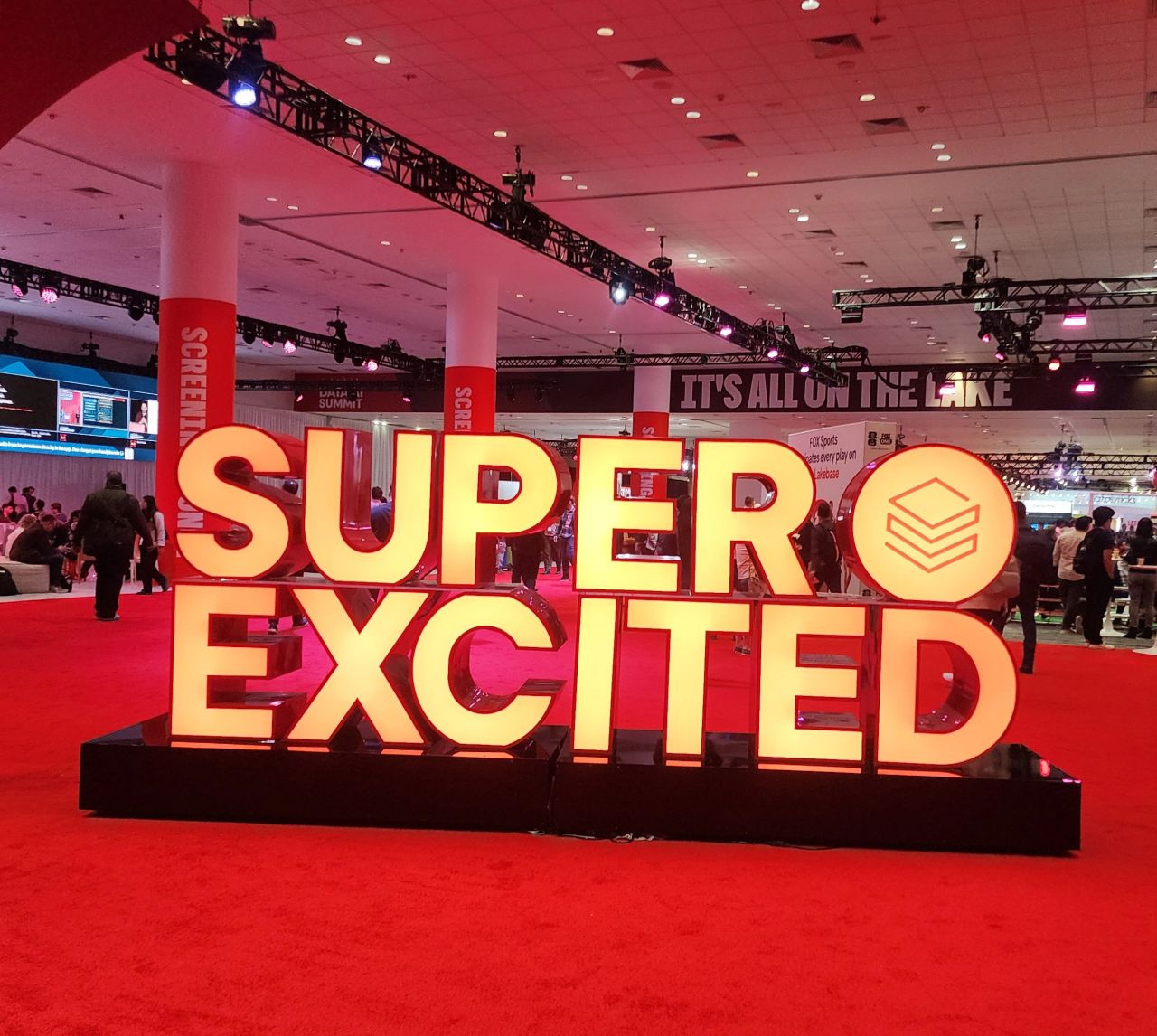
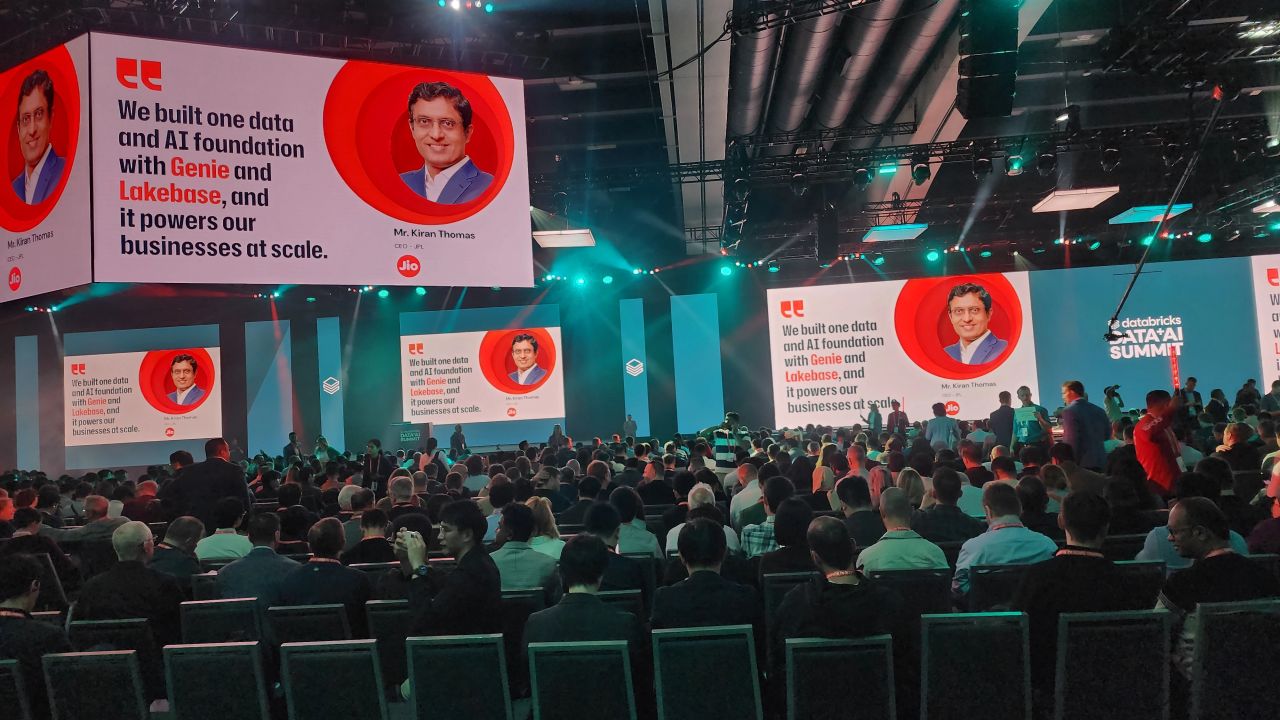
This year at the Moscone Center, the entire tone of the Databricks Data + AI Summit was different.
For the past two years, the conversation at Data + AI Summit kept circling the same question: how do we build agents? By this year, that question had started to fade. The demos were better, the tools were stronger, and most teams in the room had already built something that worked, at least in a controlled setting.
People wanted to talk about what happens after that first win: They didn't want to know how to build an agent, but how to live with one. Who gets to use it, and for what? What does it cost to run day-to-day, beyond the demo? What happens when it gets something wrong, and how quickly can the team fix it?
That move from building to running set the tone for the week.
Across four days in San Francisco, Databricks introduced a set of products that, together, start to answer those questions. Unity AI Gateway, Genie Ontology, and Genie ZeroOps were announced separately, but in the room, they felt linked: less like one-off features and more like parts of a system that is finally being assembled. "The era of building agents is giving way to the era of operating them reliably," says Yury Trushkov, Chief Technology and Delivery Officer at FullStack.
We were there all week, posting reactions in real time and comparing notes with teams already wrestling with these problems in production. What came out of those conversations was not just a list of announcements, but a clearer picture of what it takes for these systems to hold up under real use.
Unity AI Gateway: central control for enterprise AI agents
At the Summit, Databricks introduced Unity AI Gateway, a central AI governance layer that sits in front of agents, LLM endpoints, MCP servers, and coding tools to manage access, cost, and guardrails.
Most companies are still running a patchwork. Different teams hit different models, with separate accounts, budgets, and rules. It works for experiments, but once usage grows, the seams show: Costs are hard to track, access is uneven, and although policies exist on paper, enforcement is hit-or-miss.
Unity AI Gateway goes after that gap. It gives you one place where all requests to models and tools pass through, with shared controls for who can use what, how much they can spend, and which rules apply. Every request is tied back to a specific user or system, which may sound obvious, but is often missing.
There is nothing glamorous about it. You would not center a keynote demo on it. But it tackles the problem that shows up the moment these systems become part of daily work. If you cannot see how they are being used, or rein them in when needed, you cannot trust them.
Genie Ontology: semantic context for Databricks production agents
Alongside the Gateway, Databricks announced Genie Ontology, an automatically generated map of your data and business that provides agents with a live, governed context layer rather than raw tables.
A cluster of familiar failures shows up as soon as agentic systems sit on top of real business data: Outputs drift because the system does not fully grasp what the data represents, and definitions change from one team to the next. Within a single product, the same question can yield different answers depending on how a model interprets it.
Genie Ontology steps into that gap by creating a shared layer of meaning across data, queries, dashboards, docs, and connected apps. Instead of treating everything as undifferentiated input, it spells out how pieces of information relate to one another and what they are meant to represent, complete with metric definitions, authoritative sources, and business rules. In practice, that means tighter definitions, more consistent relationships, and fewer moments where the system is left to guess.
It is quieter than a new model release, but just as important. Systems that do not understand the data they work with tend to look impressive right up until accuracy is on the line.
Genie ZeroOps: operating Databricks AI systems in production
To cover what happens after deployment, Databricks also introduced Genie ZeroOps, a background agent that continuously monitors production data and AI workloads, investigates issues, and proposes fixes before they hit users.
This is where teams still get caught off guard. Systems do not stay stable on their own. Costs creep up. Performance shifts. Edge cases appear in places no one thought to test. Small issues, if they pass unnoticed, turn into larger ones.
Genie ZeroOps is aimed at that ongoing grind. It monitors how systems behave over time, detects failures and data quality issues, traces root causes through lineage, and drafts fixes that can be safely reviewed and applied, often in a sandboxed environment. The point is not to remove people, but to reduce the manual effort required to keep things steady.
At a certain scale, constant babysitting becomes unrealistic.
A practical architecture for enterprise agentic AI
By the end of the week, a shared pattern had come into view. Not a formal framework, but a set of basics the teams in the trenches kept circling back to.
If you want something that works outside a demo, you need three things.
A clear way to define and interpret your data, so the system is not guessing at meaning.
A way to control access, usage, and cost, so behavior stays inside the lines.
A view into how the system is performing over time, plus a way to act quickly when something breaks.
Ignore any one of those, and problems surface fast. Get all three into place, and the system starts to feel like something you can lean on.
How we’re working with these building blocks
For our team here at FullStack, the most interesting part of the Summit was not any single product, but how clearly the pieces now line up with the work we are already doing with clients.
On the data side, we spend a lot of time getting the basics into shape so agents have something reliable to stand on: consistent metrics, clear entities, and shared definitions that tools like Genie Ontology can actually use. On the platform side, our agent patterns naturally route through a gateway-style layer, so Unity AI Gateway feels less like a new idea and more like a cleaner way to express controls we were already designing: who can call what, with which tools, under which constraints.
Day-to-day, we are helping teams move from one-off agents to small ecosystems that must live with real guardrails and real expectations. In that sense, Unity AI Gateway, Genie Ontology, and Genie ZeroOps are less a new direction and more a confirmation that the industry is standardizing around the same problems we have been solving: grounding agents in real context, putting a control point in front of every call, and treating operations as part of the design, not an afterthought.
What Databricks Data + AI Summit 2026 means for your roadmap
For engineering, data, and product leaders, that is the bar now. The job is no longer getting something to work once. The job is getting it to work every day, under real conditions, without a swarm of people standing around it.
At FullStack, most of the real work has moved to exactly this layer. Teams are leaving behind early trials and building systems that carry actual workflows, with real consequences when they fail. The tools change from company to company, but the underlying needs barely budge.
What stayed with our team from San Francisco was not one headline announcement. It was the sense that more people now agree on what it takes to run these systems well. Less talk about what they might become, more attention to what keeps them upright day after day.
The Databricks Data + AI Summit 2026 is the company’s flagship conference in San Francisco, bringing together tens of thousands of data, AI, and engineering leaders to explore the latest platform updates, best practices, and real‑world use cases.
What are the biggest announcements from Data + AI Summit 2026?
The biggest announcements include Unity AI Gateway for AI governance, Genie Ontology as an enterprise context layer, Genie ZeroOps for operating data and ML pipelines, and broader platform upgrades across Genie, governance, and real‑time analytics.
What is Unity AI Gateway and why does it matter?
Unity AI Gateway is a unified, governed entry point for models, agents, tools, and AI workloads that centralizes cost controls, routing, security, and compliance, making it easier to run agentic AI safely at enterprise scale.
How do Genie Ontology and Genie ZeroOps fit into agentic AI?
Genie Ontology grounds agents in accurate business context, while Genie ZeroOps monitors and troubleshoots production data and ML workloads, together supporting the full “ground, govern, operate” lifecycle for reliable agentic AI.
Why should engineering and data leaders care about this Data + AI Summit 2026 recap?
Engineering and data leaders should care because the 2026 summit marked a shift from building experimental agents to running governed, observable, and cost-controlled agentic systems, setting a clear blueprint for future AI architectures.
AI is changing software development.
The Engineer's AI-Enabled Development Handbook is your guide to incorporating AI into development processes for smoother, faster, and smarter development.
Enjoyed the article? Get new content delivered to your inbox.
Subscribe below and stay updated with the latest developer guides and industry insights.
Thank you! Your submission has been received!
Oops! Something went wrong while submitting the form.
Iframe is blocked. Accept cookies to load it.
Thank you! Your submission has been received!
Oops! Something went wrong while submitting the form.
We use cookies to provide our services, to allow us to better understand our audience, and to provide and serve personalized ads or content. By using our website, you consent to the terms of our Privacy Policy and our Cookie Policy, and the use of cookies, pixels, and other technology as described more fully therein
.svg)
.avif)
