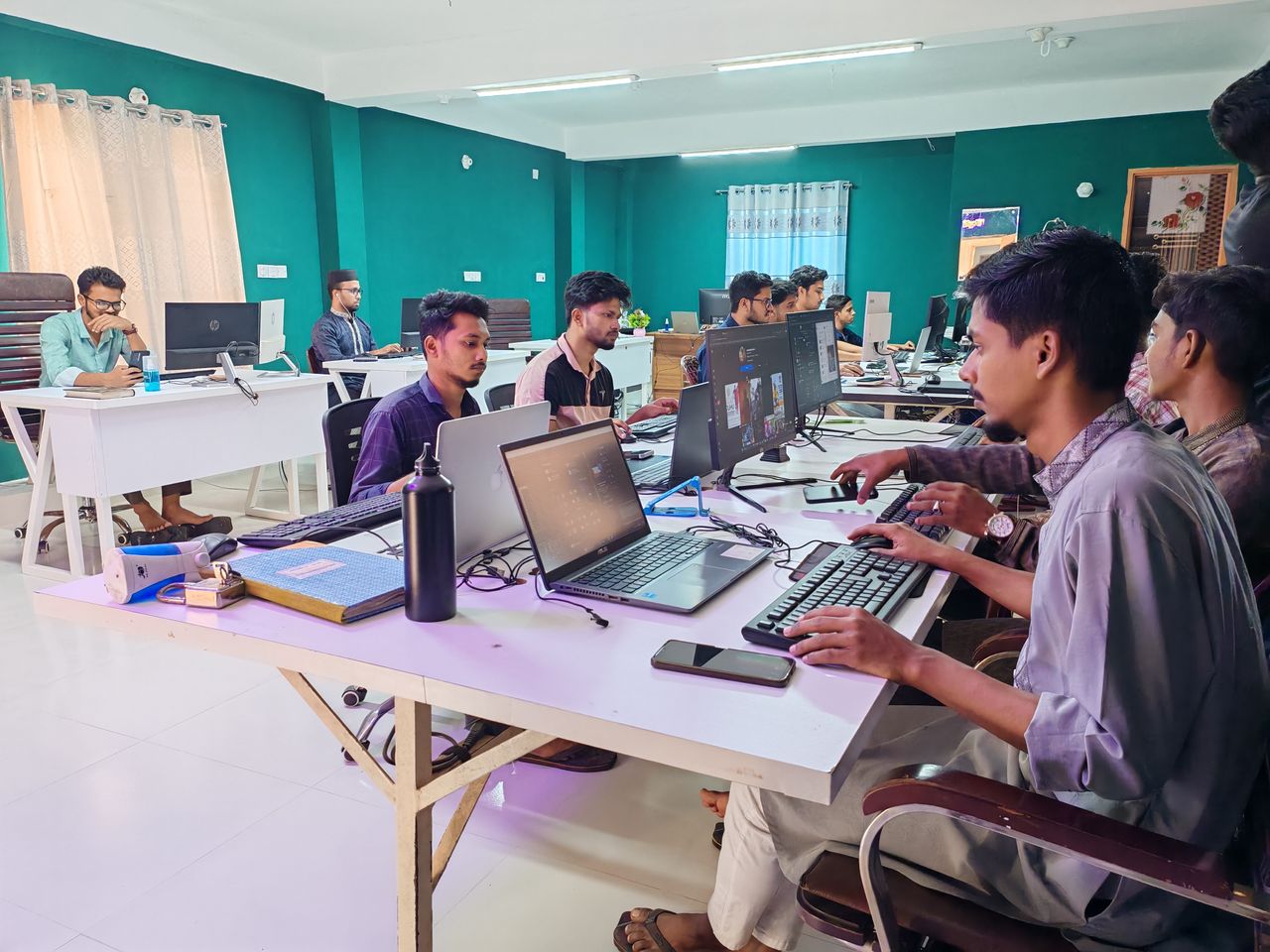
There are dozens of software development companies worldwide, but which are the best? We ranked the top custom software development companies in 2026.
About this guide. FullStack publishes this guide and is one of the five companies included in it. We haven’t engaged any of the other four firms as a client, so our assessment of them is based on publicly available information, published positioning, and client reviews—not first-hand delivery experience. Our criteria are provided below.
The demand for custom software has continued to climb. From AI-enabled products to internal platforms, businesses need engineering capacity, and they need it fast. This guide covers how to evaluate a custom software development partner, five firms worth knowing, and—perhaps most importantly—when none of them are the right call.
What is custom software development?
Custom software development is the design, development, and deployment of software built for one organization. Unlike off-the-shelf products, custom software aligns to specific workflows, data, and goals.
Why companies choose it:
Scalability. The solution grows with the business instead of hitting a licensing or feature ceiling.
Performance fit. Built for your workflows rather than the average of everybody's.
Ownership. It belongs to your business. You pay for what you need, and you keep what you build.
What are the top trends in custom software development in 2026?
AI has moved from novelty to necessity. The question is no longer whether a product has AI in it—it's whether the organization can operate it. Evaluation, guardrails, model routing, and cost attribution are now normal scope on a build rather than a research project.
Review has replaced coding as the main bottleneck. AI coding tools generate code far faster than teams can review, integrate, security-check, and release it. A 2026 NBER study of more than 100,000 GitHub developers found that AI coding tools significantly increased coding activity, but those gains diminished further down the delivery pipeline. Autonomous coding agents were associated with a 180% increase in commits, a 50% increase in projects, and a 30% increase in actual releases. The constraint has shifted downstream, requiring delivery models to strengthen the processes that turn generated code into reliable production software.
Buyers need measurable evidence, not broad AI claims. As AI productivity claims have increased while the evidence remains mixed, the question has shifted from “do you use AI?” to “what has it changed, and how do you know?” Vendors that can establish a measurable baseline are better positioned to demonstrate value than those that can’t.
AI capability is becoming more important than AI-specific job titles. The most valuable skill isn’t just prompting a model, but understanding a codebase well enough to evaluate, correct, and take responsibility for its output.
Time-zone overlap became a delivery variable. When review latency is the biggest constraint, a team that works your hours has a materially different feedback loop from one that doesn't—at identical engineering quality.
How should you choose the best software development company?
A polished portfolio and an hourly rate can help you build a shortlist, but they tell you almost nothing about what it’ll be like to work with a partner day to day. There are five questions you can ask that offer the most insight—and are also the criteria behind this guide.
1. Will they establish a measured baseline?
Before committing to timelines, ask a prospective partner to measure the current state of the product, platform, or engineering organization. A credible week-zero baseline might cover application performance, infrastructure reliability, security risk, test coverage, delivery speed, defect trends, technical debt, backlog health, and the business outcomes that matter.
The baseline should be relevant to the work rather than a generic dashboard. A documented starting point gives both sides a shared definition of success and makes it possible to show later whether the work improved quality, speed, resilience, cost, or customer outcomes.
If a candidate makes big promises but can’t explain how success will be measured before starting delivery, then it’s worth considering other options.
2. Can you interview the people who will actually do the work?
The team presenting the proposal shouldn't be entirely separate from the team delivering it. Meeting the proposed technical leads, product managers, designers, architects, and senior engineers tells you about communication style, technical depth, and whether they can work inside your organization.
It also confirms the staffing plan reflects real availability rather than a generic promise. A transparent partner can name the people proposed for key roles and explain what each will contribute.
3. Do they publish their method, or call it proprietary?
A partner doesn’t need to use the same processes your organization uses, but they should be able to explain how they work. Look for a clear account of discovery, planning, estimation, architecture decisions, quality assurance, progress reporting, and risk escalation.
Additionally, while their method being proprietary isn’t necessarily a problem, it becomes one when used to avoid explaining how work is planned, how you’ll see progress, or how the team responds when requirements change.
4. Who owns the code, the data, and the model weights when it ends?
When an engagement ends, your organization should be able to access, operate, and maintain what was built. Before it starts, confirm how the agreement handles custom source code, repositories, cloud accounts, documentation, designs, credentials, data, and third-party components.
For AI-enabled products, get specific: training data, prompts, retrieval data, fine-tuned models, model artifacts or weights, evaluation datasets, provider accounts, and deployment infrastructure. The contract should distinguish project-specific work from the vendor's pre-existing tools, reusable accelerators, and open-source dependencies.
5. Will your internal team be more capable at the end?
A good engagement should build internal capability rather than create avoidable dependency. That may include shared planning, paired development, code reviews, architecture sessions, documentation, operational runbooks, training, and a structured handoff process.
Your organization doesn’t need to bring every engineering function in-house. However, you should be able to understand, maintain, extend, or transition the software if business needs change.
How we evaluated these five companies
The criteria we used to evaluate the top companies were:
Delivery model: How teams, projects, and communication are structured, and how much time-zone overlap you get.
Technical depth: Whether the firm can handle your stack, your integrations, and any AI or data work involved.
Transparency: How much visibility you get into estimates, staffing, progress, and quality.
Stage fit: Startups, mid-market companies, and enterprises need different things.
Scale and continuity: Whether the firm can absorb an engineer leaving, or a roadmap doubling, without stopping.
What we didn’t do. We haven't hired these firms, run a controlled comparison, or scored them numerically. This is a considered shortlist with stated reasoning, and it should be one input into your own evaluation rather than a substitute for it.
No overall winner. The right partner depends on scope, required expertise, how much organizational change is involved, and how closely you want the team working with your stakeholders.
The five companies
FullStack — Collaborative nearshore delivery
Best for:Startups, SMBs, and enterprises that want one partner for nearshore team augmentation and end-to-end delivery, with substantial daily overlap with their own team.
FullStack is a technology consultancy and AI engineering firm delivering custom software and AI-enabled solutions. We bring together engineers, designers, product managers, and business analysts so a team can go from discovery to delivery with one partner, and we run a client portal for team augmentation that shows work, budgets, and progress.
The delivery model blends nearshore talent in Latin America with US-based leadership, which offers cost-effective delivery with strong time-zone overlap. This overlap is invaluable when review and feedback cycles limit how fast you ship.
Where we're weaker: We're not the cheapest option available, and if you require a multi-country enterprise transformation with heavy regulatory and procurement complexity, a global consultancy is likely a better structural fit.
Emapta — Cost-sensitive scaling
Best for: Companies that need to add engineering capacity at a lower price point and can work asynchronously.
Emapta builds offshore teams, with significant delivery capability in the Philippines, and competes primarily on cost. For organizations with well-defined work, mature written processes, and tolerance for limited real-time overlap with US hours, this approach can be effective. The firm's model is genuine offshore employment rather than short-term contracting, which tends to help with retention and continuity.
Accenture — Enterprise-wide transformation
Best for: Large organizations running multi-country change programmes where scope extends well beyond software delivery.
Accenture brings deep industry specialization, established global delivery networks, and the capacity to coordinate strategy, organizational change, implementation, and ongoing operations. That breadth can be valuable for large, regulated transformation programs. For a more focused product initiative, however, the same scale may introduce higher costs and additional management layers than the work requires.
Inoxoft — Early-stage speed
Best for: Startups that need to move quickly and are comfortable with European-hours collaboration.
Inoxoft specializes in helping companies move early-stage products forward, with a delivery team based primarily in Eastern Europe. For organizations operating in European time zones—or those able to work effectively with limited daily overlap—the company can offer a competitive combination of speed and cost.
Chetu — Broad technical expertise
Best for: Companies that want fast access to developers across a wide range of niche technologies and industry verticals.
Chetu offers access to a large developer network with experience across a wide range of platforms and industry specializations. This breadth can be particularly valuable for organizations seeking specific, hard-to-find technical expertise rather than an integrated product development team.
When a global consultancy or boutique studio is a better fit
FullStack isn't the right answer for every engagement. The best partner depends on your scope, the expertise required, how much organizational change is involved, and how closely you want the team working with internal stakeholders.
Choose a global consultancy for enterprise-wide change
A global consultancy is likely the better choice if you're leading a large multi-country transformation, managing complex regulatory or procurement requirements, or need coverage across strategy, organizational change, implementation, and operations.
These firms offer industry specialization, global delivery networks, and the ability to coordinate multiple workstreams at once. Their scale also means higher cost, more management layers, and less day-to-day flexibility on a focused product initiative.
Choose a boutique studio for a narrow, specialized engagement
A boutique product studio is best when you need a small, highly focused team for a narrowly scoped MVP, a design-led customer experience, or a specialized technical problem. These studios offer close senior-level collaboration and a tailored approach.
However, their capacity is usually more limited, which makes them less suited to long-running platform work, several concurrent workstreams, or rapid team scaling.
Choose FullStack for collaborative, scalable delivery
FullStack is the best choice when you need an integrated product, design, and engineering partner that can scale with your roadmap, while working closely with your internal stakeholders. Our nearshore model is built for organizations that want time-zone alignment, experienced technical talent, and support from discovery through delivery and long-term product evolution.
Choosing a custom software development company
There isn’t one single, optimal option—rather, the best software development company will be whichever matches your scope, your stage, and how much day-to-day collaboration you actually want.
Apply the five questions above to every partner on your shortlist, including us. Look for a measurable baseline, direct access to the proposed team, a delivery method they can explain clearly, defined ownership at the end of the engagement, and a plan to strengthen your internal capabilities. When a vendor can demonstrate all five, it becomes much easier to evaluate their rate in the context of the value they provide.
If you're evaluating partners now, FullStack can walk through your project, team structure, and roadmap and help you work out whether a nearshore team, a project-based engagement, or a mix is the right fit — including whether that's us. The goal is enough clarity to compare options on delivery model, technical depth, and transparency, instead of headline rates.
What is the best custom software development company?
There’s no single best custom software development company, because the right partner depends on your scope, stage, technical needs, and preferred level of day-to-day collaboration. Compare firms based on how they structure delivery, communicate with your team, handle technical complexity, and maintain continuity as the work evolves.
How do I evaluate a custom software development partner?
Look beyond a vendor’s portfolio and hourly rate, and ask how it will work with your organization once delivery begins. A capable partner should establish a baseline, introduce the people who will do the work, explain its delivery method, define ownership at the end of the engagement, and help your internal team build capability along the way.
Is nearshore or offshore software development better?
Neither option is inherently better, but they support different working models. Offshore development often has a lower hourly rate and can work well when requirements are clear and teams are comfortable working asynchronously. Nearshore development provides greater time-zone overlap, which can speed feedback, reviews, and decisions when close collaboration matters.
Has AI made custom software development cheaper?
AI can reduce costs or accelerate delivery on particular projects, but it has not made custom software development uniformly cheaper. Code can be generated quickly, while specification, architecture, review, integration, security, and release work still require experienced people. The most useful question is whether AI has improved the cost, speed, quality, or reliability of your project—and whether the partner can demonstrate that with a baseline.
What should a custom software development contract include?
A custom software development contract should define scope, deliverables, pricing, timelines, communication practices, change management, quality expectations, security responsibilities, and termination terms. It should also clarify who owns the code, documentation, data, cloud accounts, and other project assets when the engagement ends. For AI-enabled products, confirm how the agreement handles training data, prompts, model artifacts, evaluation data, and provider accounts.
AI is changing software development.
The Engineer's AI-Enabled Development Handbook is your guide to incorporating AI into development processes for smoother, faster, and smarter development.
Enjoyed the article? Get new content delivered to your inbox.
Subscribe below and stay updated with the latest developer guides and industry insights.
Thank you! Your submission has been received!
Oops! Something went wrong while submitting the form.
We use cookies to provide our services, to allow us to better understand our audience, and to provide and serve personalized ads or content. By using our website, you consent to the terms of our Privacy Policy and our Cookie Policy, and the use of cookies, pixels, and other technology as described more fully therein
The GPC signal has been honored.
Thank you! Your submission has been received!
Oops! Something went wrong while submitting the form.
.svg)